
Designing a Mobile-first Analytics Experience for High-stakes Market Monitoring
Project Overview
Services:
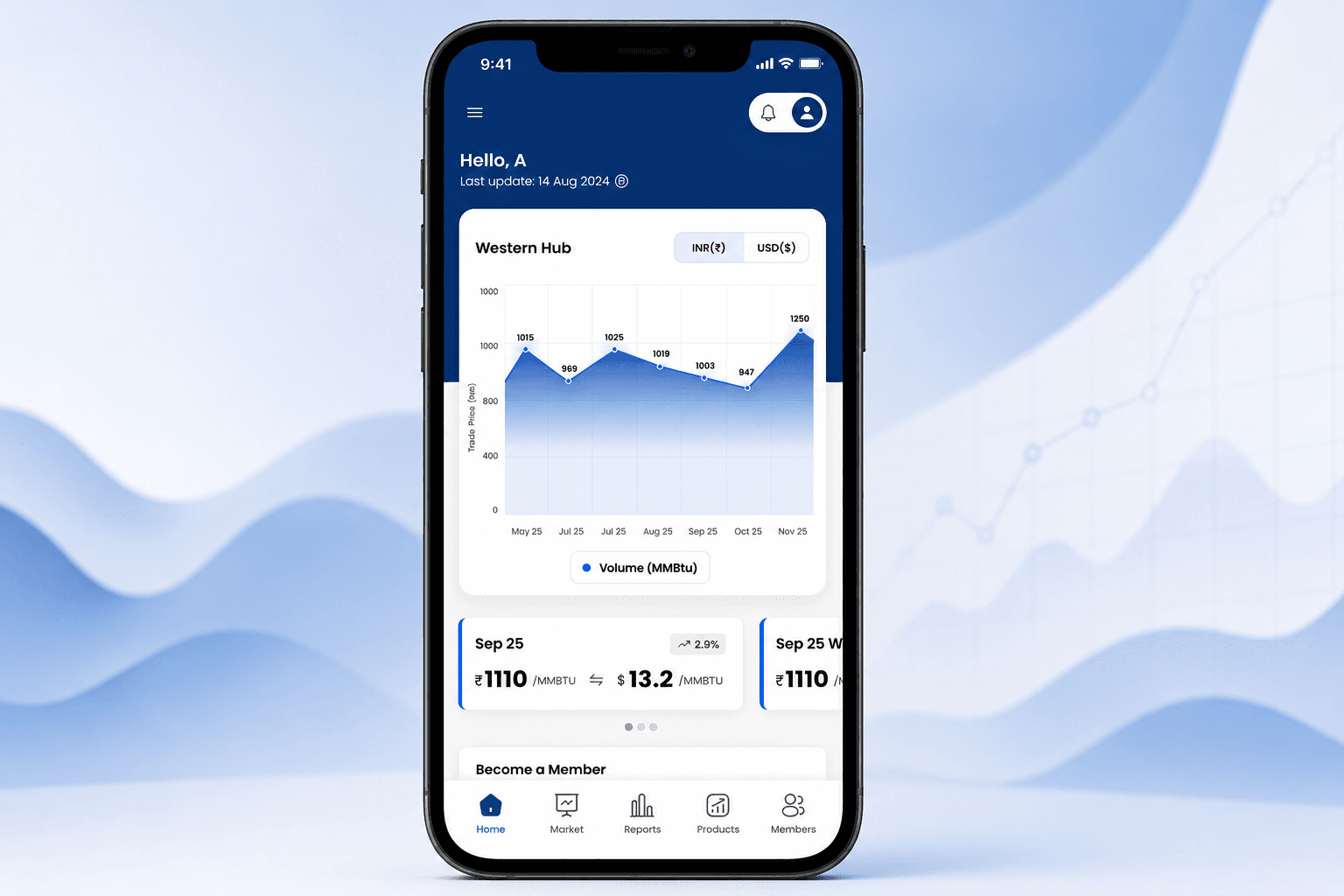
Problem
When we started digging we found that the existing platform operates in a high-stakes, institutional environment where:
Trading decisions involve large financial exposure
Execution requires secure, compliant systems (desktop-first)
Users (buyers, traders, suppliers) are often away from their desks
While this was there we also saw that, there was no efficient way for users to:
Track real-time market movements on the go
Respond quickly to price fluctuations
Stay informed without logging into a full trading terminal
This created a gap between staying informed about the market insights and executing trades. We simplified the problem in 1 line.
👉Users don’t just need real-time prices.
They need context behind market movement to make informed trading decisions later on desktop systems.
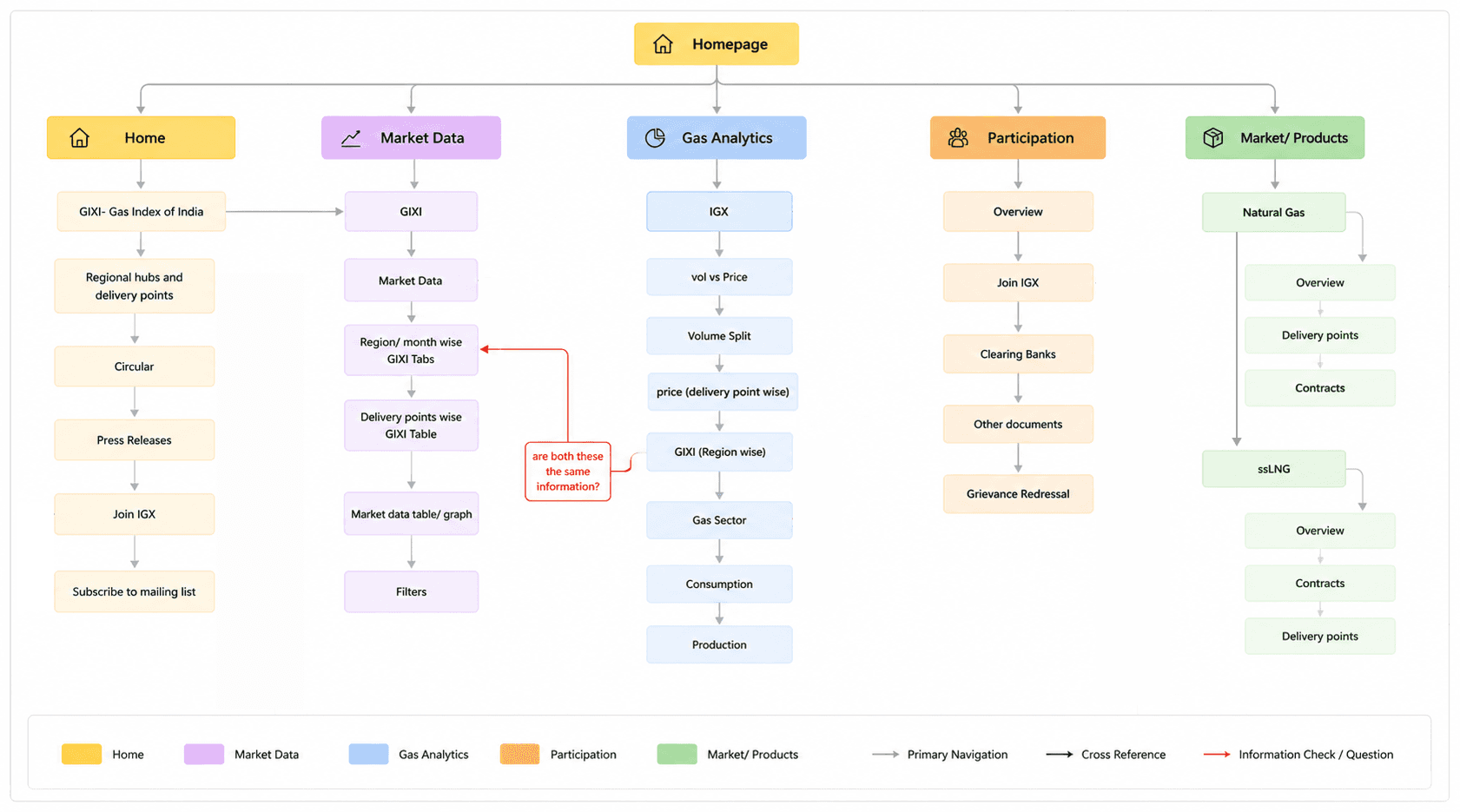
We started by breaking down what would a gas trader/suplier/buyer focus on before making a trading deal. The common questions they asked each time were
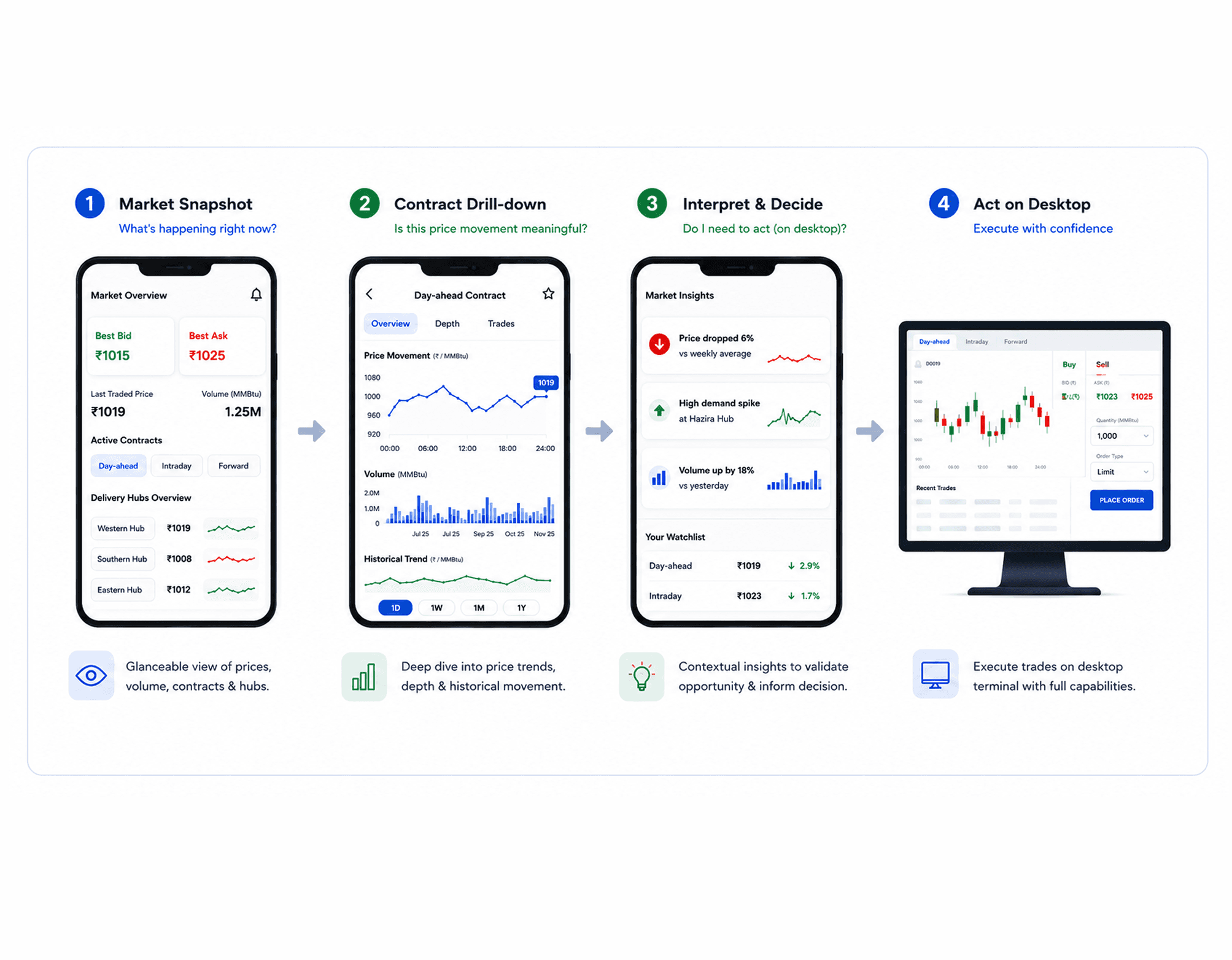
“What’s happening in the market right now?”
“Is this movement meaningful?”
“Which hubs are active?”
“Should I act now?”
“Is this a good opportunity?”
So accordingly the app needed to present:
Multi-variable analytics
Contract-based market data
Volume-price relationships
Hub-specific trends
…while still remaining scannable on smaller screens.
Design Approach
With the problem identified and broken down it's time to get to the designing part. We focused our approach in the following manner:
Progressive disclosure: Showing only the most important information upfront while revealing deeper data gradually as users interact.
Visual hierarchy: Organizing information based on importance so users instantly know where to focus.
Card-based analytics modules: Breaking complex analytics into smaller, self-contained cards instead of large dense dashboards.
Simplified chart interactions: Reducing unnecessary chart complexity to make trends understandable quickly.
Clear labeling for contracts & hubs: Using explicit naming and structured labeling to avoid confusion in a high-stakes trading environment.
UX Decisions
Progressive disclosure: Showing only the most important information upfront while revealing deeper data gradually as users interact.
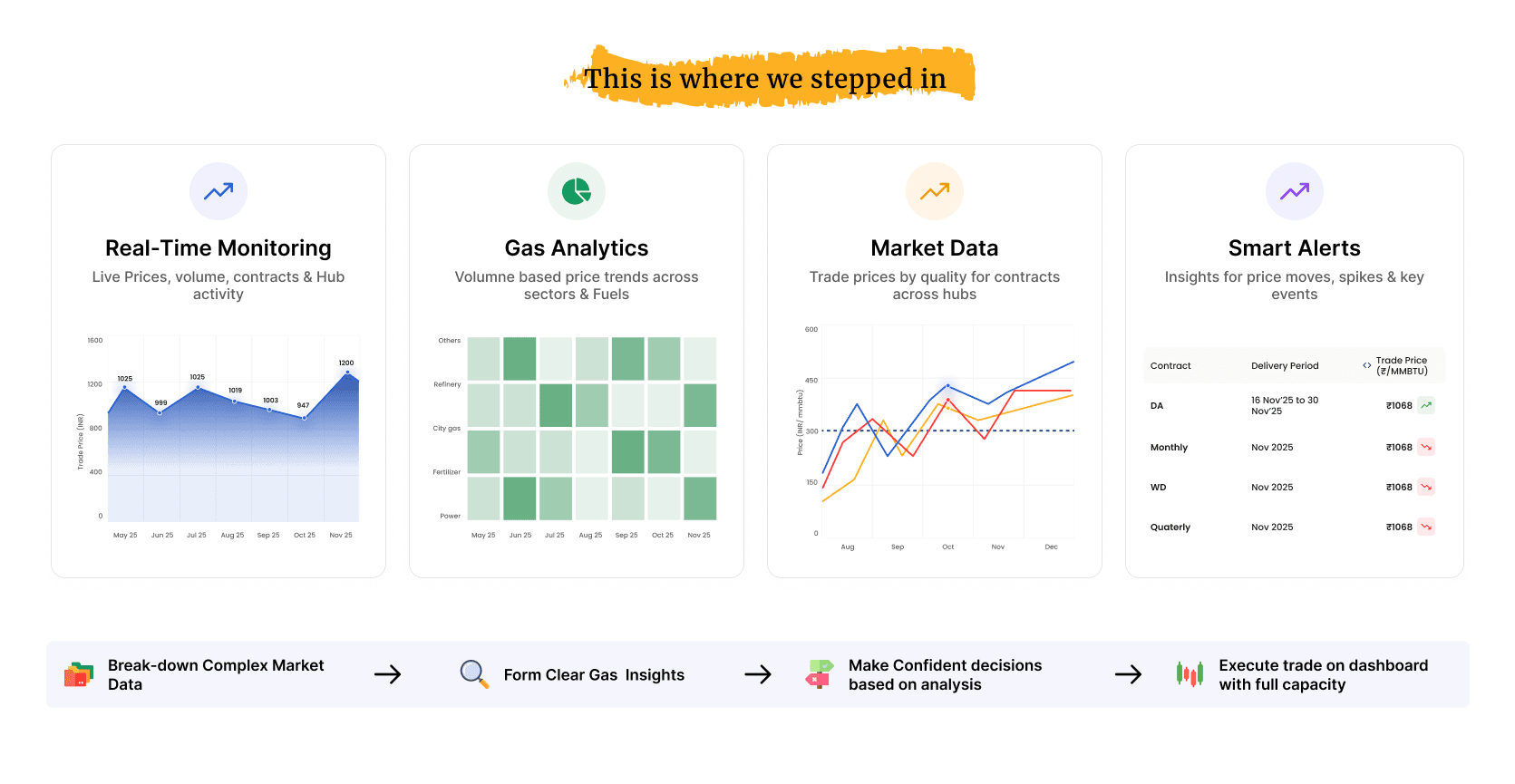
Trend-first Visualization: Focused on market movement and price trends over decorative visuals to improve data interpretation speed.
Clear Market Signals: Highlighted anomalies, spikes, and high-activity hubs to help users identify opportunities faster.
Reduced Cognitive Load: Minimized unnecessary interactions & simplified data presentation to improve readability on smaller screens
Scannable Analytics: Used compact analytics cards and structured layouts for quick comparison across sectors, fuels and contracts.
Outcome
The mobile experience successfully:
Enabled users to track markets in real time
Reduced dependency on desktop for basic monitoring
Improved decision timing
Maintained zero-risk interaction model
🤖 Integrating AI into the Design Workflow
01.
AI-assisted Domain Research
Getting the system live was more valuable than polishing every detail. It gave us something to test, use, and improve.
03.
Simplifying Complex Information
Collective ownership led to smarter solutions and more buy-in.
04.
Accelerating Design Exploration
Figma tokens and variables made theming, scaling, and iterating less chaotic.
02.
Improving Clarity
The system we launched wasn’t the final one. And that was intentional - we built it to grow.
What I’d Improve Next
Smarter Insights
Introduce contextual insights like unusual price drops, demand spikes, or high-activity hubs to help users identify market opportunities faster instead of interpreting raw data manually.
Cross-device Continuity
Allow users to save contracts or market views on mobile and continue deeper analysis later on desktop trading systems.
Team Collaboration
Enable quick sharing of market snapshots and internal notes to support faster decision-making across procurement and trading teams.
Final Thoughts
Designing this project taught me that enterprise products are not always action-driven.
Sometimes the real value lies in helping users interpret complex systems faster and with more confidence.
No items